For a warehouse operation, where inventory control matters
What came in. What went out. What is about to expire.
A truck arrives. A truck leaves. Some of it goes to another organisation and some of it goes in the bin. Use-by is the date that matters, and if it is not on one list the funder report is a guess.
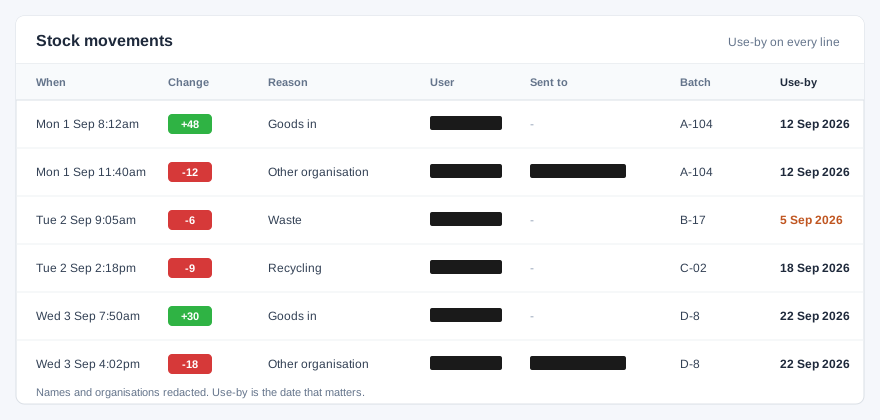
In, out, and the date on the product
One list, and use-by on the line rather than in somebody's head.
-
1
Goods in
Supermarket, donor, wholesaler or community drive. About thirty seconds a line.
-
2
Goods out
Distribution, a recipient branch, waste, recycling, compost or pigs.
-
3
One list
Stock movements, with use-by, batch, lot, note and source beside each other.
Are you managing the challenges?
Three things a warehouse has to get right.
Stock In
From a mixed box to a pallet in the loading bay.
Food safety
Track use-by, best-before and out the door.
Consistent compliant recording
Easy, fast, user friendly options for stock movement tracking.
Explore
Use-by leads, because it is the date that forces a decision.
- Use-by
- Best-before
- Batch
- Lot
- Note
- Source
- Barcode
What it costs
$40 a month Per 100 items in inventory control, plus GST.
A 30-day trial first. The number is per 100 items you actually put under inventory control, counted as a weekly average over three months, so a warehouse that starts with one product category pays for one product category.
You do not have to take the rest of the platform to use this.
Training
Short videos, because a volunteer will not read a manual. Use the standard set, or upload your own filmed on your own loading bay, which is the version people actually follow.
Who we work with
A well-known Auckland foodbank came off a laptop spreadsheet and now runs its warehouse on this.
We do not name the food banks we work with. The warehouse is real and we are happy to describe how it runs, but naming them is their call and not ours. If you want a reference, please ask.
Start a 30-day trial
Put one product category under inventory control and time goods-in on your own loading bay. That is the test worth running.
Start a 30-day trialThirty days. No wider platform, and nothing past the trial.
One page for whoever signs it off
What it is
A warehouse list of every movement, with use-by on the line. Trucks in, trucks out, other organisations, waste and recycling. Batch, lot and a note sit beside the date.
What it is not
Not a new checkout. Not a produce subscription. Not a promised grant, and not a claim that the software will stop waste on its own.
Cost
A 30-day trial. Then $40 a month per 100 items in inventory control, plus GST. About thirty seconds of somebody's time per item on goods-in.
Risk
If goods-in is skipped, there is no data and the report is worth nothing. That is the one real risk, and it is a staffing question rather than a software one. Time it on the loading bay during the trial.
Who is liable
The organisation holding the goods is liable for that part. How stock is stored, handled and released stays with whoever has it in the building. Our side is the record: every movement is kept, backed up and available to you, on a system we run to a 99.9% uptime target, measured monthly. Your figures stay your organisation's, kept secure and private. Food safety is the organisation's responsibility, but we will hold expiry dates where they are entered.
Decide
Approve a 30-day trial of stock movements. Not a wider platform.
Questions
The ones an operations lead asks.
Is this the shop floor?
No. This is the warehouse. Trucks in, trucks out, other organisations, waste and recycling, on one list.
Why use-by and not best-before?
Use-by is the date you have to move it by. Best-before is still worth recording, on the same line, at lower urgency.
How long does a line take?
About thirty seconds per item. Time it on your own loading bay during the trial rather than taking our word for it.
Our volunteers will not learn another system.
Training is short videos. Use the standard set, or upload your own filmed on your loading bay.
What does per 100 mean?
Per 100 items you have put under inventory control. An item is a product type, not a unit on the shelf: a product that carries several barcodes is still recorded as one product, and counts once. $40 a month plus GST.
Will this stop waste?
It will show you what is about to expire. Moving it is still yours to do.
Can a funder see this?
The report is the same list. Whether a particular funder accepts it is on them.
Who sees our figures?
Your organisation. HelpingHand is the vendor.
Do we have to take the rest of the platform?
No.